
Review
Review
WOOF x3: What The Dawgpound, Vol. III Revealed About the Scene
WOOF x3: What The Dawgpound, Vol. III Revealed About the Scene
WOOF x3: What The Dawgpound, Vol. III Revealed About the Scene
Puff your chest out.
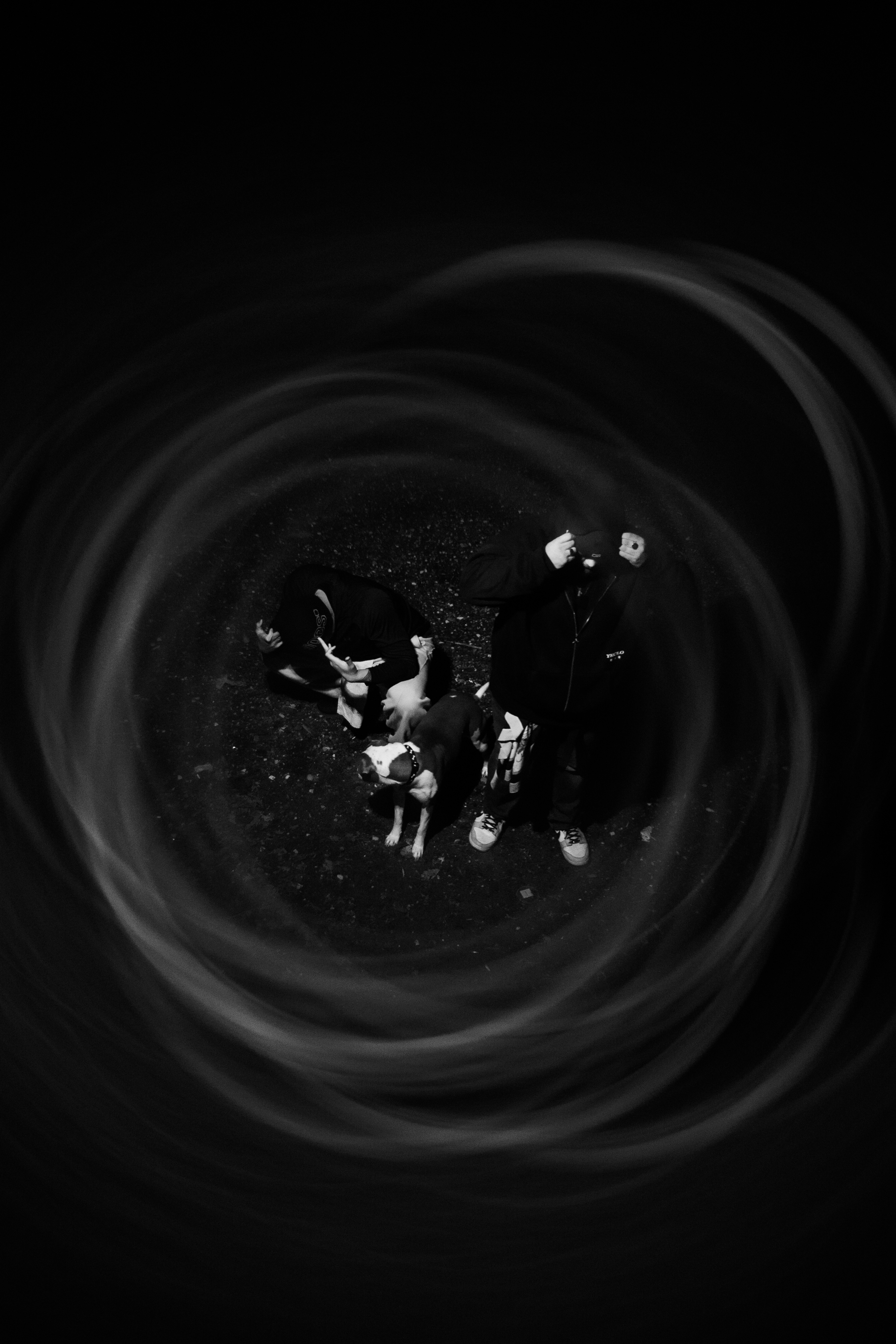
DAWGWLKRZ are back with another event.
The Dawgpound, Vol. III was not just a night of battles. It was a temperature check for the street dance community: who is active, who is developing, who is being challenged.
Full disclosure: I was one of the judges for the event, so I am not writing this as a completely detached observer. I am writing from inside the space, with all the proximity, responsibility, and bias that comes with that. But that position also allowed me to feel the pressure of the night closely: what dancers were bringing, what the room was responding to, and what we as judges were trying to read in real time.
The event asked two questions clearly: what does this reveal about the current state of street dance in Tāmaki Makaurau, and was this battle just a competition, or a snapshot of where the culture is heading?
By the end of the night, it felt like the answer was both. The Dawgpound, Vol. III proved that Auckland’s street dance scene has the talent and hunger needed for stronger battle culture, but it also exposed uneven development across styles, unclear battle expectations, questions around who is missing from the circle, and the ongoing issue of cultural labour being held up by passion instead of proper resourcing.
The DAWGWLKR Territory
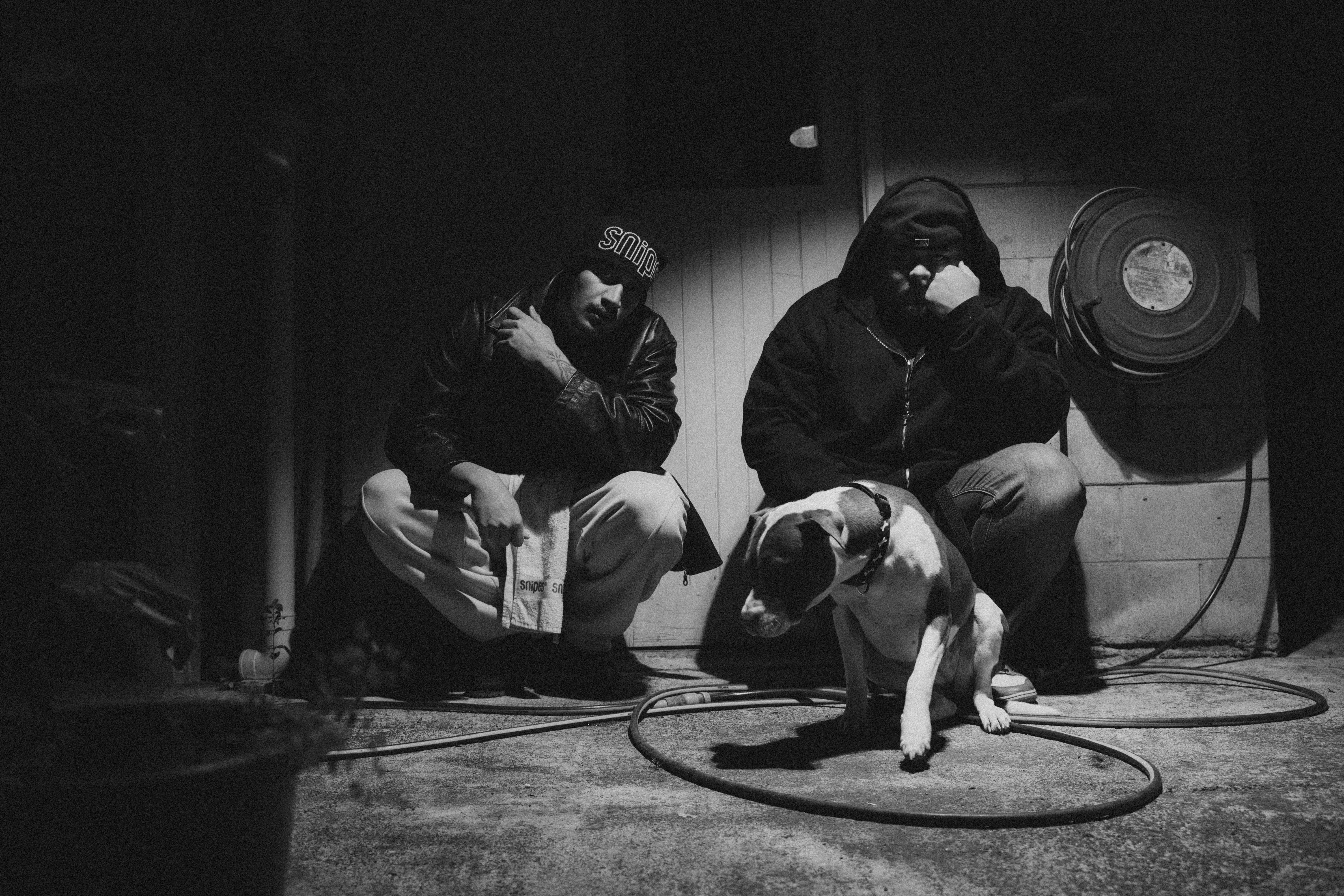
A range of people attended the event. It was a good turnout, with a strong presence of Krump supporters, a good amount of Hip Hop enthusiasts, and a few Breakers ready to get down. For an event of this kind, it created an opportunity for different street dance communities to meet in a street environment, and hopefully open more pathways for these scenes to interconnect.
That felt like one of the quiet strengths of the night. It was not just one scene showing up for itself. Multiple communities attended, each bringing their own energy, history, and expectations. In Tāmaki alone, street dance communities can still feel separated by style, generation, geography, or crew affiliation. Events like this can become a bridge between those pockets, especially when the event is clear about its identity.
But the event’s energy was not neutral.
Although the format invited different styles, The Dawgpound intentionally favoured dancers who could meet a confrontational, battle-heavy energy. That is not a flaw, but it is worth naming. This was not a soft showcase. It was not simply an all-styles gathering where every style could exist unchanged. It was a pressure space, and some dancers seemed more ready for that pressure than others.
You could feel that even in the prelim cyphers. As a judge in the Hip Hop cypher, I felt the circle shift when Astroandy brought energy to his round, when 1AM directed material toward people in the cypher, or when Myke (DGT) used other bodies in the space to execute material. The cypher had its own fight.
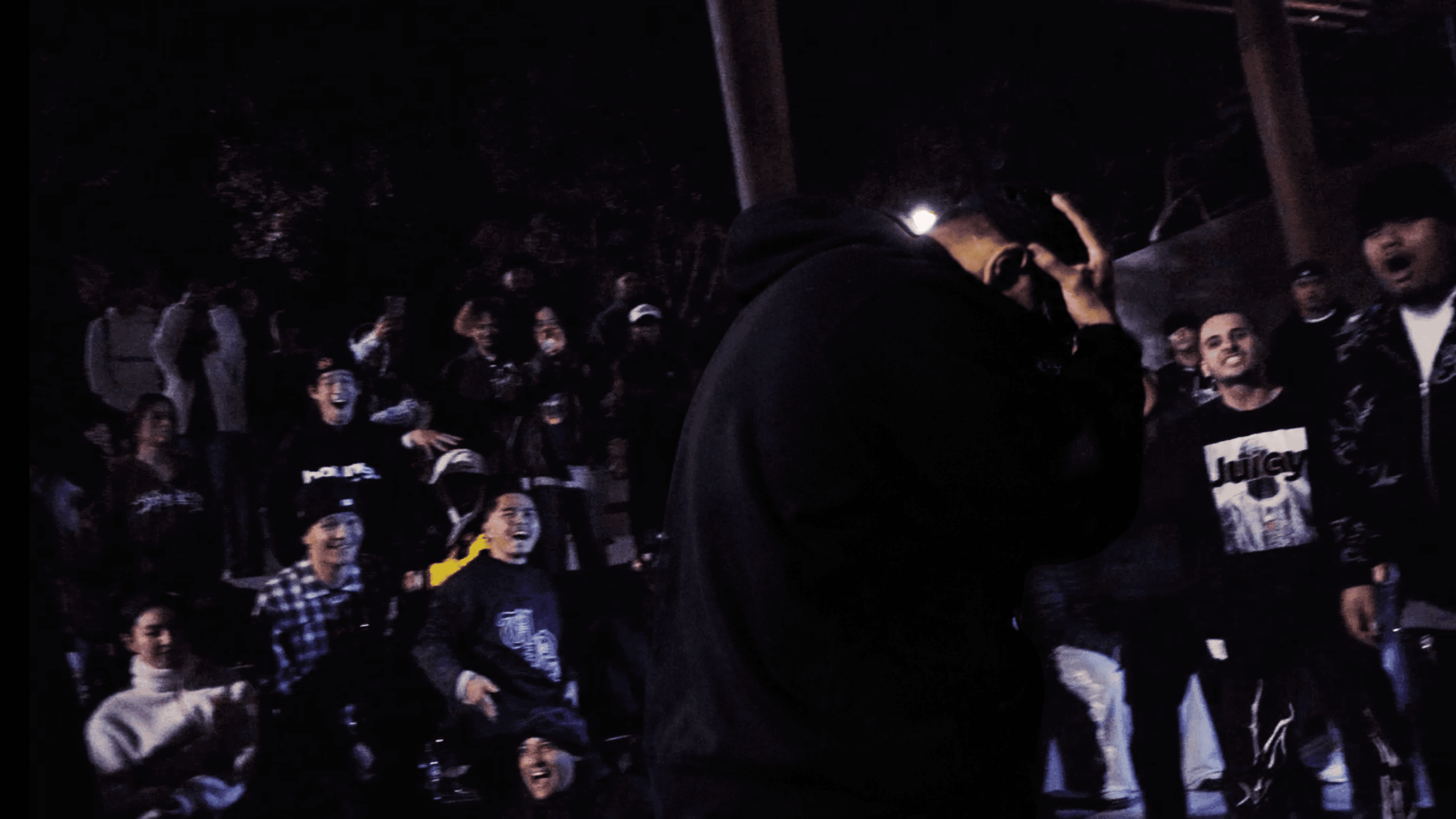
The crowd was not passive either. People watched, reacted, and fed the dancers. When someone caught the music, made a clear choice, or brought the kind of attack that demanded a reaction, the space responded.
The event also had an energy of “no talking, just get to dancing.” The MCs were direct. The pacing was efficient. Everything that needed to be understood was said with the utmost minimalism, and the dance was the main thing. At times, that could come across as “low-etiquette,” but in this context, it felt ritualistic to the brand of DAWGWLKRZ. The event did not over-explain itself. It asked people to step into the circle and prove themselves there.
The Eyes for Sound
After the prelims, the judges had the hard job of picking two people from the cyphers. We were then given a moment on the mic to speak briefly about what we were looking for, and all three of us centred our thoughts around musicality.
Krump judge Chris “EXCB” Teava talked about the importance of hitting musicality through getting off, and using that to “show your opponent that they’re losing.” This was echoed by Breaking judge Andy Choi in what he witnessed in his cypher. I spoke about how the Hip Hop cypher became so focused on showing technical aspects of the dance that it started to feel too insular. The ones who stood out were the dancers who were getting off and showing more heart in their battles.
Essentially, the dancers who were rewarded were the ones who established their presence and could do so inside the music.
Musicality in battles is not just about hitting beats. It is about using the music to make your argument clearer. It is about showing that you are not dancing over the track, but with it, and inside it. The music becomes part of the conversation between dancer, opponent, judge, and crowd.
The strongest dancers were not always the ones with the most explosive rounds. They were the ones who could adjust to the music, read their opponent, and still look like themselves. Spectacle can win a moment, but identity, musicality, and battle intelligence are what carry a dancer through the night. When a battler found that pocket, they purged the bullshit dead-air in their round and dropped something solid.
A clear example of this was Riān in the finals. In his first exchange with Myke, Riān showed composure, instantaneous rebuttals to Myke’s off-round remarks, and strong moments hitting pauses in the music that the crowd could read.
Each scene came at different levels. Compared to the Krump and Hip Hop representatives, the Breaking representatives at this event seemed to be more emerging. Whether that reflects the current level of breakers in Auckland, the outreach into the Breaking scene, or simply who was available on the night, it still pointed to an opportunity. The Breakers who showed up mattered because they helped make the event broader than one or two styles, stoking the fire of a foundational style to the culture of battling and Hip Hop.
The Game Being Played
One of the more interesting tensions of the night was that the energy of The Dawgpound was clear, but the criteria may not have been clear to everyone entering or observing.
Battle events often carry rules that are not only written, but embodied. There is the format that gets announced, and then there is the deeper culture of the event: the attitude, expectation, tone, level of confrontation, and the kind of energy the space is asking for.
Some dancers seemed to understand that the event was asking them to battle. Others looked like they had entered a showcase inside a battle format.
That difference matters.
The event could have benefited from clearer judging criteria at the start, not because dancers need to be spoon-fed, but because a battle becomes more compelling when everyone understands the game being played. If the space is asking for musicality, presence, foundation, battle tactics, and the ability to respond under pressure, then naming that clearly helps dancers know what kind of pressure they are stepping into.
However, at the same time, street events have an embodied approach. Not everything can be (or is) explained through a microphone. Some things have to be felt by stepping in, losing, watching, coming back, and slowly understanding what the space actually values.
That may be part of what The Dawgpound is building. The more consistently these events happen, the less ambiguous the expectations become.
Let’s Get Beefy: The Battles
The best battles were conversations. They felt like arguments held in a contained space.
Moments could have easily become volatile if the attitude leaked outside of the battles, but for the most part, dancers were mature enough to keep it in the dance. Battle culture asks people to bring confrontation, confidence, and attack into the space, but it also asks them to hold enough discipline to keep those things inside the exchange.
That is the tightrope The Dawgpound walks as an event. It invites a certain danger into the space, but that danger is contained by the culture of the battle. If it spills too far out, the space could become unsafe. If it is softened too much, the battle loses its edge. On the night, I felt that balance mostly held.
The no-time-limit structure became one of the strongest tests of the night. On paper, it could have disrupted the pacing, but it did not. Instead, it became an extension of each dancer’s battle tactic.
That freedom worked as a double-edged sword. It gave dancers autonomy, but it also exposed their sense of judgement. The format did not just test who had material. It tested who understood taste.
Dancers who went in, gave a solid round, and knew when to stop left a stronger impression. Knowing when you have said enough felt like a skill that only a few dancers had in the midst of the battles.
Achilles was a clear example. Three battles in, he went up against Rian. By that point, we had already seen what he could do. The music played, he took his time feeling into it while staying fully committed to his movement and his opponent. He brought us into his round, dropped new material, and dusted it off where he needed to. It was compact: in-and-out. Rian responded with an equally strong round, but it was the compactness of solid content that edged the decision towards Achilles for me.
On the other side, Myke’s last round in the finals showed the risk of overextending. Myke was dangerous the entire night. His ear for technicality and impossible-to-copy execution make him a threat in any event, even more so at The Dawgpound. But in his final round against Rian, it felt like he had already built his point and kept searching. The energy slowly leaked out.
Don’t get it twisted. These moments do not define the dancers, but they were determining factors in the outcomes of the night. All of the dancers leaned into one side or the other at different points, which highlighted the real quality of controlling the space.
The top four especially showed the value of control. The moves were there, but their presence showed up first, and to me, that separated good from deadly.
Weapons Sharpening Weapons
The Top 6 worked because each dancer represented a different kind of problem. Some brought volume. Some brought presence. Some brought originality. Some brought hunger.
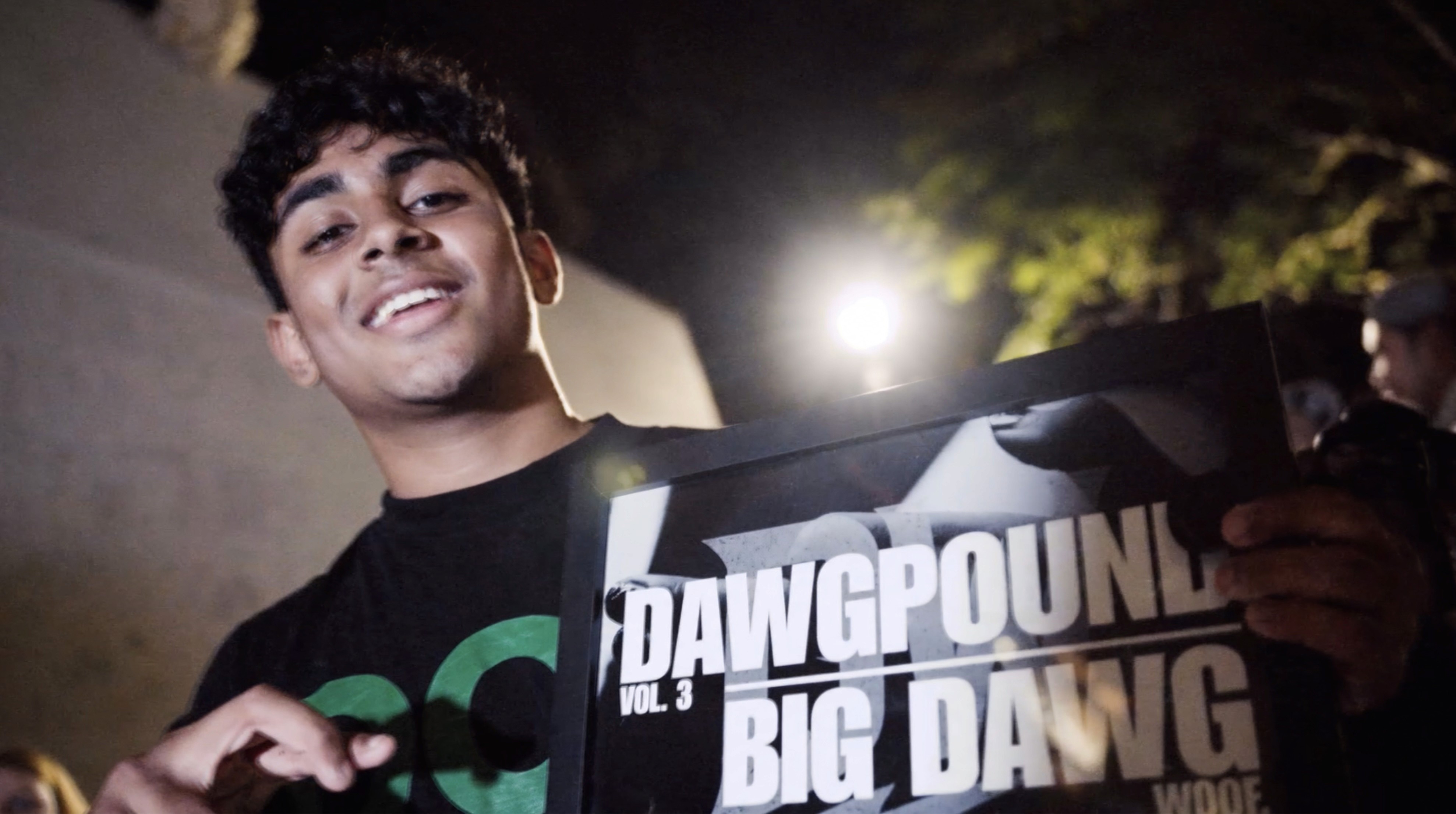
That is what made Riān’s win feel earned. He did not just run the gauntlet and win. He had to solve different kinds of threats.
Myke brought relentless material and technical musicality, with a battle-heavy approach that constantly kept pressure on his opponents. His threat was volume, detail, and the ability to keep producing under pressure.
Achilles dropped original rounds every time while maintaining nasty musicality and clean execution. He also seemed to have one of the most stamina-heavy runs of the night and still managed to stay clear in his choices. His threat was originality, stamina, and consistency.
Aktive displayed exactly what it means to be at a street event: liveness, energy, and presence. His threat was the space itself. He carried the kind of electricity that reminds people that street events are not only about technical ability, but about altering the molecules in the area with energy.
Riān clashed with them all and came out on top. That made his win feel earned. It was not just that he won the final. It was the path he had to take.
The Scene’s Health
A battle event is a health check for the community.
The location worked well. Behind the Auckland Art Gallery, it had an amphitheatre-esque aesthetic, where the audience drew closer and closer to the dancers. That closeness created a tight-knit atmosphere even while being out in an open area. The dancers were not separated from the crowd. They were surrounded by it. Keen to see more battles there.
There was a strong mix of generations, and the OGs held battles down while the younger generation kept up and, in some cases, overcame their predecessors. This did not feel like a polite passing of the torch. It felt more like being ripped from their arms, and I’m all for it.
I would have loved to see more women enter and make it into the Top 6. That is not just about representation on paper. It raises a bigger question around who feels prepared, invited, supported, and backed to enter battle spaces that run on confrontation and pressure.
If battle events are meant to sharpen the whole community, then perhaps a question we have to keep asking is who is missing from the circle, and why.
You can tell a lot about a scene by what happens after dancers are eliminated. Do they leave, or do they stay to feed the circle? The majority of dancers stayed and fed in. The crowd continued hyping until the end, and the energy lingered long after the event was done.
Sometimes I forget that that matters. It shows that battle events are not only about personal advancement through rounds. People stayed because the space still had value after their own battle journey had finished.
The Labour Behind the Event
Like the majority of our street dance events, The Dawgpound, Vol. III was run off little-to-no funding and held together by the organisers’ own equity, equipment, skill sets, relationships, and time.
The event looked simple because a lot of the labour was hidden.
That labour includes organising, promotion, sound, setup, pack-down, hosting, judging, documentation, filming, admin, risk, reputation, and the emotional labour of making a space like this feel alive without letting it fall apart.
There is something beautiful about that, but there is also something I hope can develop over time. Passion has carried street dance for a long time, but passion cannot be the only thing holding the culture up.
The event had heart, but heart cannot be the only currency. If street dance is going to grow with sustainability, then the people holding the space together need to be resourced, not just thanked.
Final Thoughts
The Dawgpound, Vol. III did what a good battle should do. It gave us a winner, but more importantly, it gave us questions.
It revealed a scene with real tools, but uneven development across styles. It showed a space that understands hype, but still needs more shared clarity around what battle pressure actually demands. It showed younger dancers getting in there, OGs still holding the standard, and a crowd hyping throughout.
The dancers who rose to the top were not simply the ones who had the most material. They were the ones who could use their tools in the flames. They had presence, musicality, identity, and enough battle instinct to survive the fight.
The scene does not need more forced hype. It needs more pressure, more courage, more hunger, more cross-style investment, and more resourcing behind the people building the space.
The ingredients are there. Let’s see what happens next.
WOOF.
Event: The Dawgpound, Vol. III
Date: 13th June 2026
Event Organisers: DAWGWLKRZ
MC: Sheldon “SCENT” Rua
Judges: EXCB, vi.LLAIN, Andy Choi
Format: Prelims Cyphers | Top 6 “Kill Confirmed”
Tournament Styles: Krump, Hip Hop, Breaking | to Hip Hop tracks
Winner: Riān
Puff your chest out.
DAWGWLKRZ are back with another event.
The Dawgpound, Vol. III was not just a night of battles. It was a temperature check for the street dance community: who is active, who is developing, who is being challenged.
Full disclosure: I was one of the judges for the event, so I am not writing this as a completely detached observer. I am writing from inside the space, with all the proximity, responsibility, and bias that comes with that. But that position also allowed me to feel the pressure of the night closely: what dancers were bringing, what the room was responding to, and what we as judges were trying to read in real time.
The event asked two questions clearly: what does this reveal about the current state of street dance in Tāmaki Makaurau, and was this battle just a competition, or a snapshot of where the culture is heading?
By the end of the night, it felt like the answer was both. The Dawgpound, Vol. III proved that Auckland’s street dance scene has the talent and hunger needed for stronger battle culture, but it also exposed uneven development across styles, unclear battle expectations, questions around who is missing from the circle, and the ongoing issue of cultural labour being held up by passion instead of proper resourcing.
The DAWGWLKR Territory
A range of people attended the event. It was a good turnout, with a strong presence of Krump supporters, a good amount of Hip Hop enthusiasts, and a few Breakers ready to get down. For an event of this kind, it created an opportunity for different street dance communities to meet in a street environment, and hopefully open more pathways for these scenes to interconnect.
That felt like one of the quiet strengths of the night. It was not just one scene showing up for itself. Multiple communities attended, each bringing their own energy, history, and expectations. In Tāmaki alone, street dance communities can still feel separated by style, generation, geography, or crew affiliation. Events like this can become a bridge between those pockets, especially when the event is clear about its identity.
But the event’s energy was not neutral.
Although the format invited different styles, The Dawgpound intentionally favoured dancers who could meet a confrontational, battle-heavy energy. That is not a flaw, but it is worth naming. This was not a soft showcase. It was not simply an all-styles gathering where every style could exist unchanged. It was a pressure space, and some dancers seemed more ready for that pressure than others.
You could feel that even in the prelim cyphers. As a judge in the Hip Hop cypher, I felt the circle shift when Astroandy brought energy to his round, when 1AM directed material toward people in the cypher, or when Myke (DGT) used other bodies in the space to execute material. The cypher had its own fight.
The crowd was not passive either. People watched, reacted, and fed the dancers. When someone caught the music, made a clear choice, or brought the kind of attack that demanded a reaction, the space responded.
The event also had an energy of “no talking, just get to dancing.” The MCs were direct. The pacing was efficient. Everything that needed to be understood was said with the utmost minimalism, and the dance was the main thing. At times, that could come across as “low-etiquette,” but in this context, it felt ritualistic to the brand of DAWGWLKRZ. The event did not over-explain itself. It asked people to step into the circle and prove themselves there.
The Eyes for Sound
After the prelims, the judges had the hard job of picking two people from the cyphers. We were then given a moment on the mic to speak briefly about what we were looking for, and all three of us centred our thoughts around musicality.
Krump judge Chris “EXCB” Teava talked about the importance of hitting musicality through getting off, and using that to “show your opponent that they’re losing.” This was echoed by Breaking judge Andy Choi in what he witnessed in his cypher. I spoke about how the Hip Hop cypher became so focused on showing technical aspects of the dance that it started to feel too insular. The ones who stood out were the dancers who were getting off and showing more heart in their battles.
Essentially, the dancers who were rewarded were the ones who established their presence and could do so inside the music.
Musicality in battles is not just about hitting beats. It is about using the music to make your argument clearer. It is about showing that you are not dancing over the track, but with it, and inside it. The music becomes part of the conversation between dancer, opponent, judge, and crowd.
The strongest dancers were not always the ones with the most explosive rounds. They were the ones who could adjust to the music, read their opponent, and still look like themselves. Spectacle can win a moment, but identity, musicality, and battle intelligence are what carry a dancer through the night. When a battler found that pocket, they purged the bullshit dead-air in their round and dropped something solid.
A clear example of this was Riān in the finals. In his first exchange with Myke, Riān showed composure, instantaneous rebuttals to Myke’s off-round remarks, and strong moments hitting pauses in the music that the crowd could read.
Each scene came at different levels. Compared to the Krump and Hip Hop representatives, the Breaking representatives at this event seemed to be more emerging. Whether that reflects the current level of breakers in Auckland, the outreach into the Breaking scene, or simply who was available on the night, it still pointed to an opportunity. The Breakers who showed up mattered because they helped make the event broader than one or two styles, stoking the fire of a foundational style to the culture of battling and Hip Hop.
The Game Being Played
One of the more interesting tensions of the night was that the energy of The Dawgpound was clear, but the criteria may not have been clear to everyone entering or observing.
Battle events often carry rules that are not only written, but embodied. There is the format that gets announced, and then there is the deeper culture of the event: the attitude, expectation, tone, level of confrontation, and the kind of energy the space is asking for.
Some dancers seemed to understand that the event was asking them to battle. Others looked like they had entered a showcase inside a battle format.
That difference matters.
The event could have benefited from clearer judging criteria at the start, not because dancers need to be spoon-fed, but because a battle becomes more compelling when everyone understands the game being played. If the space is asking for musicality, presence, foundation, battle tactics, and the ability to respond under pressure, then naming that clearly helps dancers know what kind of pressure they are stepping into.
However, at the same time, street events have an embodied approach. Not everything can be (or is) explained through a microphone. Some things have to be felt by stepping in, losing, watching, coming back, and slowly understanding what the space actually values.
That may be part of what The Dawgpound is building. The more consistently these events happen, the less ambiguous the expectations become.
Let’s Get Beefy: The Battles
The best battles were conversations. They felt like arguments held in a contained space.
Moments could have easily become volatile if the attitude leaked outside of the battles, but for the most part, dancers were mature enough to keep it in the dance. Battle culture asks people to bring confrontation, confidence, and attack into the space, but it also asks them to hold enough discipline to keep those things inside the exchange.
That is the tightrope The Dawgpound walks as an event. It invites a certain danger into the space, but that danger is contained by the culture of the battle. If it spills too far out, the space could become unsafe. If it is softened too much, the battle loses its edge. On the night, I felt that balance mostly held.
The no-time-limit structure became one of the strongest tests of the night. On paper, it could have disrupted the pacing, but it did not. Instead, it became an extension of each dancer’s battle tactic.
That freedom worked as a double-edged sword. It gave dancers autonomy, but it also exposed their sense of judgement. The format did not just test who had material. It tested who understood taste.
Dancers who went in, gave a solid round, and knew when to stop left a stronger impression. Knowing when you have said enough felt like a skill that only a few dancers had in the midst of the battles.
Achilles was a clear example. Three battles in, he went up against Rian. By that point, we had already seen what he could do. The music played, he took his time feeling into it while staying fully committed to his movement and his opponent. He brought us into his round, dropped new material, and dusted it off where he needed to. It was compact: in-and-out. Rian responded with an equally strong round, but it was the compactness of solid content that edged the decision towards Achilles for me.
On the other side, Myke’s last round in the finals showed the risk of overextending. Myke was dangerous the entire night. His ear for technicality and impossible-to-copy execution make him a threat in any event, even more so at The Dawgpound. But in his final round against Rian, it felt like he had already built his point and kept searching. The energy slowly leaked out.
Don’t get it twisted. These moments do not define the dancers, but they were determining factors in the outcomes of the night. All of the dancers leaned into one side or the other at different points, which highlighted the real quality of controlling the space.
The top four especially showed the value of control. The moves were there, but their presence showed up first, and to me, that separated good from deadly.
Weapons Sharpening Weapons
The Top 6 worked because each dancer represented a different kind of problem. Some brought volume. Some brought presence. Some brought originality. Some brought hunger.
That is what made Riān’s win feel earned. He did not just run the gauntlet and win. He had to solve different kinds of threats.
Myke brought relentless material and technical musicality, with a battle-heavy approach that constantly kept pressure on his opponents. His threat was volume, detail, and the ability to keep producing under pressure.
Achilles dropped original rounds every time while maintaining nasty musicality and clean execution. He also seemed to have one of the most stamina-heavy runs of the night and still managed to stay clear in his choices. His threat was originality, stamina, and consistency.
Aktive displayed exactly what it means to be at a street event: liveness, energy, and presence. His threat was the space itself. He carried the kind of electricity that reminds people that street events are not only about technical ability, but about altering the molecules in the area with energy.
Riān clashed with them all and came out on top. That made his win feel earned. It was not just that he won the final. It was the path he had to take.
The Scene’s Health
A battle event is a health check for the community.
The location worked well. Behind the Auckland Art Gallery, it had an amphitheatre-esque aesthetic, where the audience drew closer and closer to the dancers. That closeness created a tight-knit atmosphere even while being out in an open area. The dancers were not separated from the crowd. They were surrounded by it. Keen to see more battles there.
There was a strong mix of generations, and the OGs held battles down while the younger generation kept up and, in some cases, overcame their predecessors. This did not feel like a polite passing of the torch. It felt more like being ripped from their arms, and I’m all for it.
I would have loved to see more women enter and make it into the Top 6. That is not just about representation on paper. It raises a bigger question around who feels prepared, invited, supported, and backed to enter battle spaces that run on confrontation and pressure.
If battle events are meant to sharpen the whole community, then perhaps a question we have to keep asking is who is missing from the circle, and why.
You can tell a lot about a scene by what happens after dancers are eliminated. Do they leave, or do they stay to feed the circle? The majority of dancers stayed and fed in. The crowd continued hyping until the end, and the energy lingered long after the event was done.
Sometimes I forget that that matters. It shows that battle events are not only about personal advancement through rounds. People stayed because the space still had value after their own battle journey had finished.
The Labour Behind the Event
Like the majority of our street dance events, The Dawgpound, Vol. III was run off little-to-no funding and held together by the organisers’ own equity, equipment, skill sets, relationships, and time.
The event looked simple because a lot of the labour was hidden.
That labour includes organising, promotion, sound, setup, pack-down, hosting, judging, documentation, filming, admin, risk, reputation, and the emotional labour of making a space like this feel alive without letting it fall apart.
There is something beautiful about that, but there is also something I hope can develop over time. Passion has carried street dance for a long time, but passion cannot be the only thing holding the culture up.
The event had heart, but heart cannot be the only currency. If street dance is going to grow with sustainability, then the people holding the space together need to be resourced, not just thanked.
Final Thoughts
The Dawgpound, Vol. III did what a good battle should do. It gave us a winner, but more importantly, it gave us questions.
It revealed a scene with real tools, but uneven development across styles. It showed a space that understands hype, but still needs more shared clarity around what battle pressure actually demands. It showed younger dancers getting in there, OGs still holding the standard, and a crowd hyping throughout.
The dancers who rose to the top were not simply the ones who had the most material. They were the ones who could use their tools in the flames. They had presence, musicality, identity, and enough battle instinct to survive the fight.
The scene does not need more forced hype. It needs more pressure, more courage, more hunger, more cross-style investment, and more resourcing behind the people building the space.
The ingredients are there. Let’s see what happens next.
WOOF.
Event: The Dawgpound, Vol. III
Date: 13th June 2026
Event Organisers: DAWGWLKRZ
MC: Sheldon “SCENT” Rua
Judges: EXCB, vi.LLAIN, Andy Choi
Format: Prelims Cyphers | Top 6 “Kill Confirmed”
Tournament Styles: Krump, Hip Hop, Breaking | to Hip Hop tracks
Winner: Riān
Puff your chest out.
DAWGWLKRZ are back with another event.
The Dawgpound, Vol. III was not just a night of battles. It was a temperature check for the street dance community: who is active, who is developing, who is being challenged.
Full disclosure: I was one of the judges for the event, so I am not writing this as a completely detached observer. I am writing from inside the space, with all the proximity, responsibility, and bias that comes with that. But that position also allowed me to feel the pressure of the night closely: what dancers were bringing, what the room was responding to, and what we as judges were trying to read in real time.
The event asked two questions clearly: what does this reveal about the current state of street dance in Tāmaki Makaurau, and was this battle just a competition, or a snapshot of where the culture is heading?
By the end of the night, it felt like the answer was both. The Dawgpound, Vol. III proved that Auckland’s street dance scene has the talent and hunger needed for stronger battle culture, but it also exposed uneven development across styles, unclear battle expectations, questions around who is missing from the circle, and the ongoing issue of cultural labour being held up by passion instead of proper resourcing.
The DAWGWLKR Territory
A range of people attended the event. It was a good turnout, with a strong presence of Krump supporters, a good amount of Hip Hop enthusiasts, and a few Breakers ready to get down. For an event of this kind, it created an opportunity for different street dance communities to meet in a street environment, and hopefully open more pathways for these scenes to interconnect.
That felt like one of the quiet strengths of the night. It was not just one scene showing up for itself. Multiple communities attended, each bringing their own energy, history, and expectations. In Tāmaki alone, street dance communities can still feel separated by style, generation, geography, or crew affiliation. Events like this can become a bridge between those pockets, especially when the event is clear about its identity.
But the event’s energy was not neutral.
Although the format invited different styles, The Dawgpound intentionally favoured dancers who could meet a confrontational, battle-heavy energy. That is not a flaw, but it is worth naming. This was not a soft showcase. It was not simply an all-styles gathering where every style could exist unchanged. It was a pressure space, and some dancers seemed more ready for that pressure than others.
You could feel that even in the prelim cyphers. As a judge in the Hip Hop cypher, I felt the circle shift when Astroandy brought energy to his round, when 1AM directed material toward people in the cypher, or when Myke (DGT) used other bodies in the space to execute material. The cypher had its own fight.
The crowd was not passive either. People watched, reacted, and fed the dancers. When someone caught the music, made a clear choice, or brought the kind of attack that demanded a reaction, the space responded.
The event also had an energy of “no talking, just get to dancing.” The MCs were direct. The pacing was efficient. Everything that needed to be understood was said with the utmost minimalism, and the dance was the main thing. At times, that could come across as “low-etiquette,” but in this context, it felt ritualistic to the brand of DAWGWLKRZ. The event did not over-explain itself. It asked people to step into the circle and prove themselves there.
The Eyes for Sound
After the prelims, the judges had the hard job of picking two people from the cyphers. We were then given a moment on the mic to speak briefly about what we were looking for, and all three of us centred our thoughts around musicality.
Krump judge Chris “EXCB” Teava talked about the importance of hitting musicality through getting off, and using that to “show your opponent that they’re losing.” This was echoed by Breaking judge Andy Choi in what he witnessed in his cypher. I spoke about how the Hip Hop cypher became so focused on showing technical aspects of the dance that it started to feel too insular. The ones who stood out were the dancers who were getting off and showing more heart in their battles.
Essentially, the dancers who were rewarded were the ones who established their presence and could do so inside the music.
Musicality in battles is not just about hitting beats. It is about using the music to make your argument clearer. It is about showing that you are not dancing over the track, but with it, and inside it. The music becomes part of the conversation between dancer, opponent, judge, and crowd.
The strongest dancers were not always the ones with the most explosive rounds. They were the ones who could adjust to the music, read their opponent, and still look like themselves. Spectacle can win a moment, but identity, musicality, and battle intelligence are what carry a dancer through the night. When a battler found that pocket, they purged the bullshit dead-air in their round and dropped something solid.
A clear example of this was Riān in the finals. In his first exchange with Myke, Riān showed composure, instantaneous rebuttals to Myke’s off-round remarks, and strong moments hitting pauses in the music that the crowd could read.
Each scene came at different levels. Compared to the Krump and Hip Hop representatives, the Breaking representatives at this event seemed to be more emerging. Whether that reflects the current level of breakers in Auckland, the outreach into the Breaking scene, or simply who was available on the night, it still pointed to an opportunity. The Breakers who showed up mattered because they helped make the event broader than one or two styles, stoking the fire of a foundational style to the culture of battling and Hip Hop.
The Game Being Played
One of the more interesting tensions of the night was that the energy of The Dawgpound was clear, but the criteria may not have been clear to everyone entering or observing.
Battle events often carry rules that are not only written, but embodied. There is the format that gets announced, and then there is the deeper culture of the event: the attitude, expectation, tone, level of confrontation, and the kind of energy the space is asking for.
Some dancers seemed to understand that the event was asking them to battle. Others looked like they had entered a showcase inside a battle format.
That difference matters.
The event could have benefited from clearer judging criteria at the start, not because dancers need to be spoon-fed, but because a battle becomes more compelling when everyone understands the game being played. If the space is asking for musicality, presence, foundation, battle tactics, and the ability to respond under pressure, then naming that clearly helps dancers know what kind of pressure they are stepping into.
However, at the same time, street events have an embodied approach. Not everything can be (or is) explained through a microphone. Some things have to be felt by stepping in, losing, watching, coming back, and slowly understanding what the space actually values.
That may be part of what The Dawgpound is building. The more consistently these events happen, the less ambiguous the expectations become.
Let’s Get Beefy: The Battles
The best battles were conversations. They felt like arguments held in a contained space.
Moments could have easily become volatile if the attitude leaked outside of the battles, but for the most part, dancers were mature enough to keep it in the dance. Battle culture asks people to bring confrontation, confidence, and attack into the space, but it also asks them to hold enough discipline to keep those things inside the exchange.
That is the tightrope The Dawgpound walks as an event. It invites a certain danger into the space, but that danger is contained by the culture of the battle. If it spills too far out, the space could become unsafe. If it is softened too much, the battle loses its edge. On the night, I felt that balance mostly held.
The no-time-limit structure became one of the strongest tests of the night. On paper, it could have disrupted the pacing, but it did not. Instead, it became an extension of each dancer’s battle tactic.
That freedom worked as a double-edged sword. It gave dancers autonomy, but it also exposed their sense of judgement. The format did not just test who had material. It tested who understood taste.
Dancers who went in, gave a solid round, and knew when to stop left a stronger impression. Knowing when you have said enough felt like a skill that only a few dancers had in the midst of the battles.
Achilles was a clear example. Three battles in, he went up against Rian. By that point, we had already seen what he could do. The music played, he took his time feeling into it while staying fully committed to his movement and his opponent. He brought us into his round, dropped new material, and dusted it off where he needed to. It was compact: in-and-out. Rian responded with an equally strong round, but it was the compactness of solid content that edged the decision towards Achilles for me.
On the other side, Myke’s last round in the finals showed the risk of overextending. Myke was dangerous the entire night. His ear for technicality and impossible-to-copy execution make him a threat in any event, even more so at The Dawgpound. But in his final round against Rian, it felt like he had already built his point and kept searching. The energy slowly leaked out.
Don’t get it twisted. These moments do not define the dancers, but they were determining factors in the outcomes of the night. All of the dancers leaned into one side or the other at different points, which highlighted the real quality of controlling the space.
The top four especially showed the value of control. The moves were there, but their presence showed up first, and to me, that separated good from deadly.
Weapons Sharpening Weapons
The Top 6 worked because each dancer represented a different kind of problem. Some brought volume. Some brought presence. Some brought originality. Some brought hunger.
That is what made Riān’s win feel earned. He did not just run the gauntlet and win. He had to solve different kinds of threats.
Myke brought relentless material and technical musicality, with a battle-heavy approach that constantly kept pressure on his opponents. His threat was volume, detail, and the ability to keep producing under pressure.
Achilles dropped original rounds every time while maintaining nasty musicality and clean execution. He also seemed to have one of the most stamina-heavy runs of the night and still managed to stay clear in his choices. His threat was originality, stamina, and consistency.
Aktive displayed exactly what it means to be at a street event: liveness, energy, and presence. His threat was the space itself. He carried the kind of electricity that reminds people that street events are not only about technical ability, but about altering the molecules in the area with energy.
Riān clashed with them all and came out on top. That made his win feel earned. It was not just that he won the final. It was the path he had to take.
The Scene’s Health
A battle event is a health check for the community.
The location worked well. Behind the Auckland Art Gallery, it had an amphitheatre-esque aesthetic, where the audience drew closer and closer to the dancers. That closeness created a tight-knit atmosphere even while being out in an open area. The dancers were not separated from the crowd. They were surrounded by it. Keen to see more battles there.
There was a strong mix of generations, and the OGs held battles down while the younger generation kept up and, in some cases, overcame their predecessors. This did not feel like a polite passing of the torch. It felt more like being ripped from their arms, and I’m all for it.
I would have loved to see more women enter and make it into the Top 6. That is not just about representation on paper. It raises a bigger question around who feels prepared, invited, supported, and backed to enter battle spaces that run on confrontation and pressure.
If battle events are meant to sharpen the whole community, then perhaps a question we have to keep asking is who is missing from the circle, and why.
You can tell a lot about a scene by what happens after dancers are eliminated. Do they leave, or do they stay to feed the circle? The majority of dancers stayed and fed in. The crowd continued hyping until the end, and the energy lingered long after the event was done.
Sometimes I forget that that matters. It shows that battle events are not only about personal advancement through rounds. People stayed because the space still had value after their own battle journey had finished.
The Labour Behind the Event
Like the majority of our street dance events, The Dawgpound, Vol. III was run off little-to-no funding and held together by the organisers’ own equity, equipment, skill sets, relationships, and time.
The event looked simple because a lot of the labour was hidden.
That labour includes organising, promotion, sound, setup, pack-down, hosting, judging, documentation, filming, admin, risk, reputation, and the emotional labour of making a space like this feel alive without letting it fall apart.
There is something beautiful about that, but there is also something I hope can develop over time. Passion has carried street dance for a long time, but passion cannot be the only thing holding the culture up.
The event had heart, but heart cannot be the only currency. If street dance is going to grow with sustainability, then the people holding the space together need to be resourced, not just thanked.
Final Thoughts
The Dawgpound, Vol. III did what a good battle should do. It gave us a winner, but more importantly, it gave us questions.
It revealed a scene with real tools, but uneven development across styles. It showed a space that understands hype, but still needs more shared clarity around what battle pressure actually demands. It showed younger dancers getting in there, OGs still holding the standard, and a crowd hyping throughout.
The dancers who rose to the top were not simply the ones who had the most material. They were the ones who could use their tools in the flames. They had presence, musicality, identity, and enough battle instinct to survive the fight.
The scene does not need more forced hype. It needs more pressure, more courage, more hunger, more cross-style investment, and more resourcing behind the people building the space.
The ingredients are there. Let’s see what happens next.
WOOF.
Event: The Dawgpound, Vol. III
Date: 13th June 2026
Event Organisers: DAWGWLKRZ
MC: Sheldon “SCENT” Rua
Judges: EXCB, vi.LLAIN, Andy Choi
Format: Prelims Cyphers | Top 6 “Kill Confirmed”
Tournament Styles: Krump, Hip Hop, Breaking | to Hip Hop tracks
Winner: Riān
Villa Junior Lemanu

Review
Sep 8, 2026
BEATDOWN: A Mum's Take
Read article
Review
Sep 8, 2026
BEATDOWN: A Mum's Take
Read article
Review
Sep 8, 2026
BEATDOWN: A Mum's Take
Read article

Review
Jul 26, 2026
Honest thoughts on An Honest Conversation
Read article
Review
Jul 26, 2026
Honest thoughts on An Honest Conversation
Read article
Review
Jul 26, 2026
Honest thoughts on An Honest Conversation
Read article
Review
Jul 2, 2026
WOOF x3: What The Dawgpound, Vol. III Revealed About the Scene
Read article
Review
Jul 2, 2026
WOOF x3: What The Dawgpound, Vol. III Revealed About the Scene
Read article
Review
Jul 2, 2026
WOOF x3: What The Dawgpound, Vol. III Revealed About the Scene
Read article